
Distribution Is King: Why Code Is No Longer the Moat
5 min read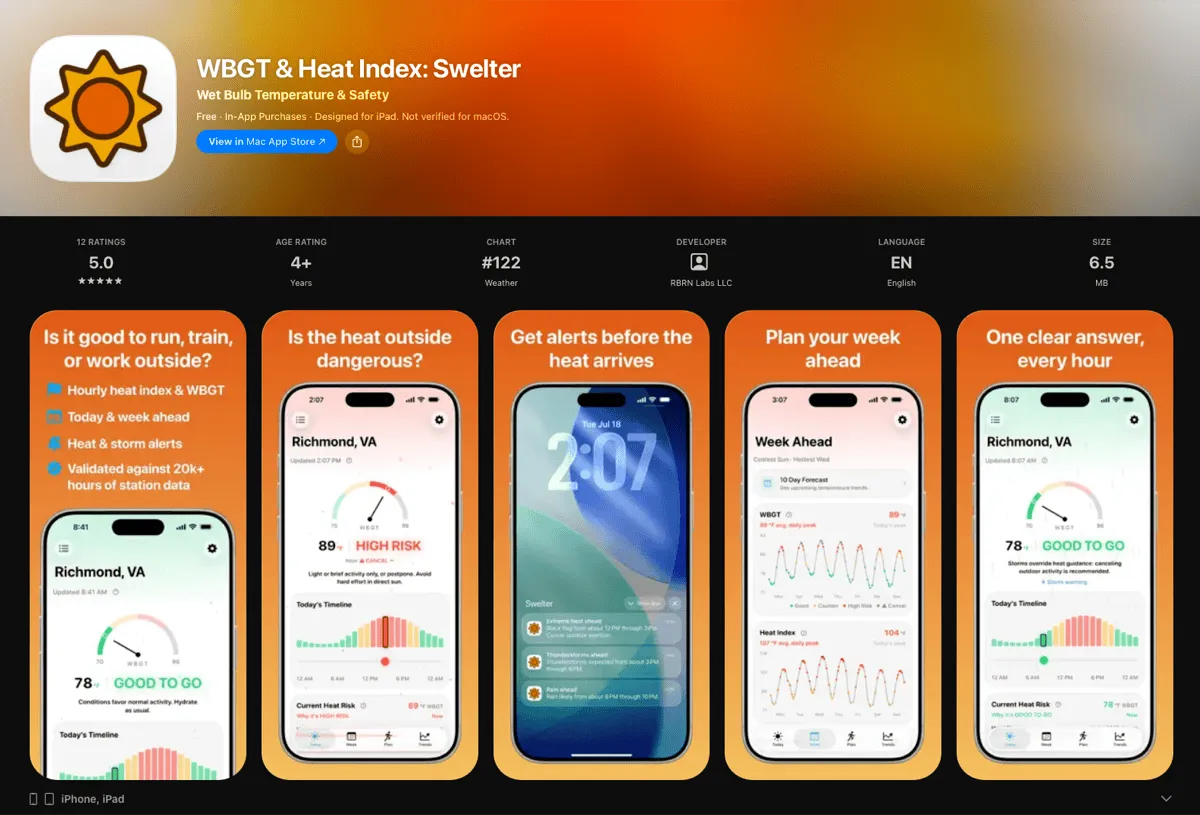
I spent this summer building an app called Swelter. It is a project I am passionate about; I built it first and foremost to solve a problem I actually have: making sure the heat outdoors is not dangerous when I go for a run. The climate in Richmond, VA, where I live, is extremely hot and humid during summers. I wanted an app that was science-based, and could analyze heat conditions for me. I also wanted to build a project that could add real value to people, as our climate is becoming hotter and more dangerous every year.
I did not expect to find multiple clones of my app already on the App Store within the first weeks of launch. I launched Swelter ~6 weeks ago, and there are already multiple apps which have copied my UI design elements, my marketing language, or my App Store screenshot designs. This is 100% my fault, as I went on Reddit (excitedly) to share reports of how well the app was doing financially post-launch. Lesson learned: when you find a successful niche, be careful about what information you disclose!
This is actually the key finding though: Swelter had hundreds of hours of work poured into the validation & data science behind ensuring the app’s algorithm is as accurate as possible. Most apps do not do this, and so they can ship a worse product much faster (within a day or two using Claude Code or Codex).
In a world where anyone, even non-coders, can ship an app in a few days of work, how do you actually build a sustainable business model?
Distribution and execution are the key.
I nailed the execution of Swelter. My conversion metrics are elite and I’ve had 0 churn (no cancellations). The app has top-percentile earnings per download and retention. I am not sharing this as a flex, but as a lesson. The execution of this app was strong, but my distribution strategy was flawed.
Currently I’ve been relying on Apple Ads, with a longer-term plan to taper solely to organic search traffic once my App Store listing has enough seniority and ratings (signals which help boost your app in search results, rather than relying on paid ad placements).
Running paid ads (Apple Ads, which I’m using, or something like Meta Ads, etc.) is a fine strategy; many apps or businesses rely solely on this and scale to huge revenue.
But there is a better way: organic content, and organic search rankings.
And no, I am not talking about “AI UGC” (Google it, if you’re unfamiliar). This is a strategy I see all over social media, but I refuse to use it. Using fake AI-created “influencers” to sell your app/product is unethical and wrong, even if it works.
Organic content can take different forms. I had great success posting on Reddit to get an initial round of feedback. I also find SEO works well if you are in a niche. And organic traffic in the actual App Store itself is still a winnable game, if you pick a super specific niche (like I did, with this app), and you pick the right keywords for your title. You need to pick a strategy that you find enjoyable, and that actually leads to measurable traffic, growth, and momentum for your app.
My next app will be a project in a far more saturated category. So I’m going to need to take an entirely different approach. I’m not sure yet, but I’m leaning towards organic social media content. If you tell a story with your app (around transformation, what value it provides you / what identity shift it can help you achieve), these kinds of apps can perform extremely well as organic content. There are many people looking for a tool to help them achieve their goals. As an app developer / entrepreneur, it is your goal to find a way to present your app to those people, when they are looking for it: either on the App Store search itself, or on social media. Meet people where they are, and find a way to share your app with the people that are looking for it. It takes experimentation, trial and error, and failing a bunch of times until you get it right.
If you go the paid ads route like I did (I still have a bit of an inherent dislike for “marketing”), there is an entire domain of expertise around picking the correct keywords, keyword research, fine-tuning your ads so you don’t overspend, etc. If you want the lowest-effort route to impressions, Apple Ads work well, and don’t require much work to get at least a steady stream of downloads flowing to your app.
Going back to the execution side of things, I made one key error when developing Swelter which almost every programmer makes. This is the mindset you must break out of when you transition from programmer to entrepreneur. Ship way sooner than you think you need to!
I had the core algorithm and utility of Swelter built, and then I spent an entire month adding new features before I launched.
You need to build the polished core functionality of your app, and then launch to the market ASAP. New features can come as future updates. A lot of the time things you think people want, they actually don’t. And suggestions from real users of your app/product will give you better ideas than you might’ve had yourself.
The mindset needs to be: Build the core of your app/product, make it really useful and polished, and then ship. Iterate and add features from real feedback. Post on Reddit, Twitter, etc. in communities related to your niche. People that live and breathe whatever problem-domain your app exists in will give you the best ideas, suggestions, and feedback.
You still need to build a quality product of course, but in this modern AI world, you need to ship faster.
When I started coding years ago, coding itself was the moat. In order to launch an app you had to know how to build, test, design, and architect a codebase, handle App Store Connect processes, and set all of these things up.
Nowadays anyone with a $20 / month ChatGPT or Claude subscription can do all of this easily. The hard part is now building an audience or a funnel that drives impressions and downloads on your app/product page, and building a sustainable and durable business model.
I’m still just getting started; this app is not yet the mega-viral smash hit I’m building towards. But it has already taught me more valuable lessons in 6 weeks than I learned during the past few years of not shipping anything.
Build an app, ship it fast, iterate from feedback, try different strategies to market it, and simply keep scaling once you find what works. Positive momentum is addicting once you unlock it!